








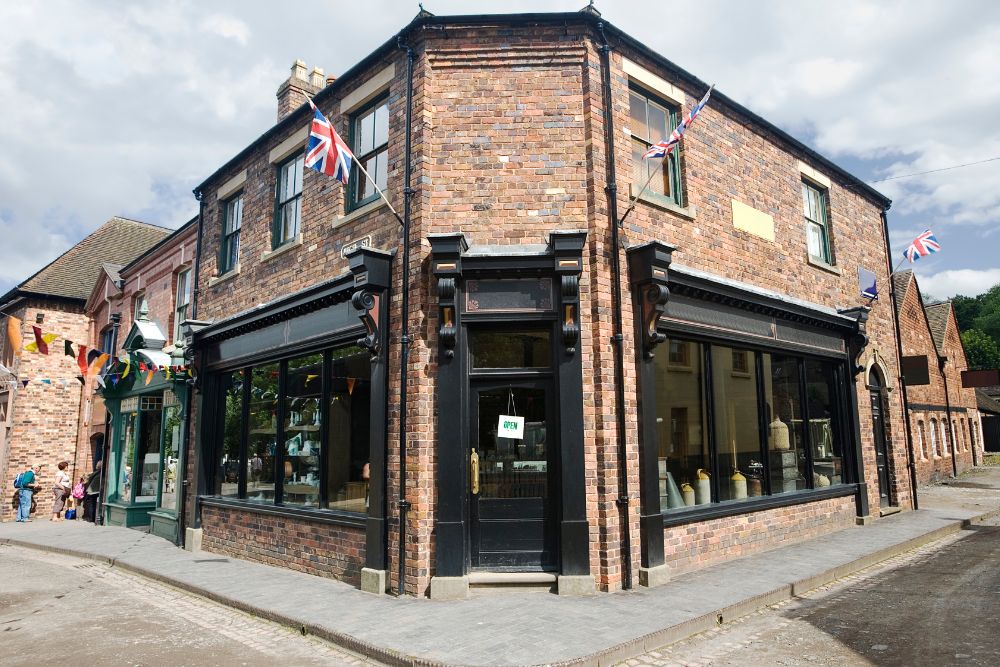
Mixed-use buildings are part of everyday life in the UK. Walk down a typical high street and you will often find shops, cafés, small offices and services at ground level, with one or more residential flats above. For landlords, these buildings can be appealing: they are familiar, often well-located, and they may offer two income streams within one structure.
Insurance is where mixed-use properties can become more complicated than they first appear. Even if the flats have their own entrance and are let on standard residential agreements, insurers and underwriters still look at the building as a single risk. A loss event rarely respects floor plans. If something happens in the commercial unit below, it may affect the flats above, shared services, common access routes, and sometimes neighbouring premises too. This is easy to miss.
That is why mixed-use property insurance exists. It is designed to reflect how the building is actually used, rather than trying to fit it into a purely residential policy or a purely commercial one. Here we explain what counts as a mixed-use property, why standard landlord insurance is typically not suitable on its own, what cover is commonly included, and how to compare policies in a way that reduces the likelihood of gaps in protection.
What counts as a mixed-use property?
For insurance purposes, a property is in many cases classed as mixed-use when it combines residential accommodation and commercial premises within the same building or structure. The important point is use.
Separate entrances, separate meters and even separate tenancy agreements may not necessarily change how the insurer or provider assesses overall exposure, because the building still behaves as one connected risk.
Mixed-use arrangements vary widely. Some buildings may be 80% residential with a small commercial unit at ground level. Others are primarily commercial with a few flats above. Insurers and underwriters will usually want clarity on the split between residential and commercial use, the type of business activity, and how the building is managed.
Shop + flat above
A shop with flats above is the classic mixed-use set-up. The commercial space might be a small independent retailer, a convenience store, a salon, a café, a takeaway, or an office. Above it, there may be one flat or several, sometimes accessed via a shared entrance, sometimes via a separate side door.
From an insurer’s perspective, the key questions are practical. What is the shop used for? Does it involve cooking or heat sources? Is there high customer footfall? Are there extended opening hours? Is there any specialist equipment?
These details help insurers and underwriters assess the potential for loss events such as fire, escape of water, accidental damage and liability claims.
Live/work units
Live/work units are designed for combined residential living and business activity within one unit. They are common in newer developments, particularly in city centres and regeneration areas. The business use can range from desk-based work to client-facing activity or small-scale production.
Insurers and underwriters typically focus on whether the business activity changes the risk profile compared to a standard residential occupation. A designer working from a laptop is usually considered differently from a unit that receives regular visitors, stores stock, or uses equipment that increases fire or escape of water exposure.
Part-commercial buildings
Some properties are mainly residential but include a small commercial element, such as a studio, surgery or office. Others have multiple commercial units on the ground floor with several flats above. There are also buildings where the commercial and residential areas share key services, such as a single roof space, drainage runs, or a communal hallway.
Because the range is wide, insurers and underwriters will normally assess each building based on how it is used in practice. Clear, accurate disclosure helps the policy reflect the reality of the risk.
Why standard landlord insurance typically won’t cover mixed-use buildings
Standard landlord insurance is typically built for residential property. Once a commercial element is introduced, the assumptions behind residential-only cover may no longer apply. Similarly, commercial property insurance is designed to cover commercial risks – not residential. That does not mean mixed-use buildings cannot be insured. It simply means the policy needs to match the occupancy and the risk profile. The solution is typically known as mixed-use insurance.
Commercial premises often in practice have different exposures. There may be higher footfall, different liability considerations, increased fire risk depending on the business type, and different regulatory responsibilities. Even something as simple as longer opening hours can affect how quickly issues are noticed or reported.
Another point that landlords sometimes overlook is how insurers and underwriters interpret responsibility across the building. Fire, escape of water and structural issues do not stay neatly contained within one unit. A loss event in the shop can affect the flats above, shared access routes and the building fabric. This is why mixed-use buildings are often in practice assessed as one risk rather than two separate risks stitched together.
Because mixed-use buildings fall outside standard residential definitions, typically landlord insurance alone is not sufficient, particularly where commercial activity introduces additional exposures. Understanding where residential cover ends and commercial exposure begins is important.
If the commercial use is not correctly declared or is outside the scope of the policy, there is a risk of exclusions, restrictions, or disputes at claims stage.
What a mixed-use insurance policy should include
A mixed-use commercial and residential insurance policy is intended to cover the building in a way that reflects both residential and commercial use.
Below are the features that are commonly considered when arranging mixed-use property insurance for a shop with flats above – but note that the precise cover available will vary between policy providers, so it is always important to read the wording and confirm what is included.
Buildings cover
Buildings insurance typically covers the physical structure: walls, floors, ceilings, roofs, and permanent fixtures. With mixed-use property, the sum insured should reflect the full rebuild cost of the entire building, not just the residential part.
It is also worth checking how the policy treats communal and shared parts of the building, such as stairwells, entrance halls, shared service cupboards, bin stores, and any shared outbuildings. These areas can be a source of liability claims and are often in practice involved in escape of water or fire losses.
Property owners’ liability
Property owners’ liability is particularly important in mixed-use buildings because the building may be accessed by residential tenants, commercial tenants, customers and delivery drivers, and members of the public.
It is designed to provide protection if someone is injured or their property is damaged as a result of the condition of the building. Typical examples can include injuries caused by loose tiles, uneven flooring, or damage resulting from falling masonry. The most appropriate level of cover will depend on the nature of the premises and the degree of public access involved.
However, it is important to note that property owners’ liability insurance is not a substitute for proper upkeep. Claims arising from poor or neglected maintenance are unlikely to be covered, and landlords remain responsible for keeping the building in a safe and reasonable state of repair at all times.
Tenant improvements
Commercial tenants may fit out a unit to suit their business. That might include installed counters, partitions, specialist lighting, or flooring. Whether those improvements are insured by the landlord or the tenant depends on the lease and the policy wording.
Who is responsible for insurance cover – the landlord or the commercial tenant?
This is one of the areas where misunderstandings are common. It can help to clarify, early on, what the landlord is responsible for insuring and what the commercial tenant should insure under their own contents or business policy.
Contents (where applicable)
Some mixed-use landlords provide contents within the residential flats, or retain responsibility for certain fixtures and fittings. In those situations, contents cover may be relevant.
Contents for commercial units are more often in practice insured by the business tenant, but again this depends on the lease. If the landlord does provide items within the commercial unit, it is sensible to confirm how those items are insured.
Loss of rent
Loss of rent cover can be particularly valuable for mixed-use properties because a serious incident in one part of the building can affect the rest. If the flats above become uninhabitable following an insured event, rental income may be disrupted while repairs take place.
Some policies may include alternative accommodation cover for residential tenants, or provide cover for loss of rent for a defined period, subject to policy limits and conditions. The appropriate level of cover depends on the rents involved and how quickly repairs could realistically be completed.
How business tenants affect insurance requirements
The nature of the business tenant in the commercial unit is often in practice one of the strongest drivers of insurer appetite and pricing. This is not about stereotypes. It is about practical risk: what happens on the premises each day, how busy it gets, what equipment is used, and how a loss event could spread through the building.
A quiet office or professional service is commonly assessed differently from a café, takeaway or bar. Cooking equipment, fryers, extraction systems and high-temperature appliances can increase fire exposure. Busy premises may also increase liability risk because more people are coming and going.
Flood exposure for ground-floor units is also a consideration, particularly in areas with known surface water risk. Escape of water risk can be affected by the condition of pipework, the presence of dishwashers or commercial sinks, and whether the premises are left unattended for long periods.
Changes matter too. If the commercial unit changes use, it is important to tell the insurer or mixed-use buildings insurance provider. A policy that accepted a quiet retail unit may not automatically be suitable for a different business type.
Insuring flats above a commercial unit
Flats above commercial premises are common and are often in practice insured without difficulty, but they can be assessed differently from standalone residential buildings. The key is clarity: insurers and underwriters need an accurate picture of the business below, the residential arrangements above, and how the building is managed.
Residential risks
Residential risks in a mixed-use building can include escape of water affecting multiple levels, fire spreading from the commercial unit, and claims arising from communal areas such as shared stairwells.
In practice, insurers and underwriters often focus on risk management measures. That can include appropriate fire protection (such as compliant alarm systems where required), good maintenance routines, and clear arrangements for inspections and repairs.
Combined buildings insurance vs separate policies
In many cases, a single mixed-use policy covering the entire building may offer the simplest approach. It reduces the chance of overlap or gaps, and it ensures shared structures are covered consistently.
Separate policies are sometimes used where ownership differs or where the building is split in a way that makes separate cover practical. If individual policies are used, it becomes important to ensure that all shared and structural elements are insured and that responsibilities are clearly defined.
How premiums are calculated
Premiums for mixed-use property insurance reflect the overall risk profile of the building. Location, construction, age, condition, previous claims history and rebuild cost all play a part. The residential-to-commercial split is also relevant, as is the type of business operating below.
Security measures can influence pricing, particularly where there is a shop front at street level. Insurers and underwriters may take account of physical security measures such as shutters, intruder alarms, CCTV and robust locking systems when assessing mixed-use or commercial risks. These features are commonly referenced within insurer underwriting guides and commercial property policy wordings, particularly where premises are accessible to the public or located in higher-risk areas.
Fire protection and day-to-day risk management practices can also influence underwriting appetite, especially for businesses with higher footfall or those involving heat-producing equipment.
Measures such as appropriate fire detection, maintained electrical systems and clear operational controls are often considered as part of an overall assessment of risk, rather than as standalone requirements, and their relevance will depend on the nature of the business and the insurer’s individual criteria.
Why similar buildings can attract very different premiums
Two mixed-use buildings on the same street may attract noticeably different premiums, even if they look similar from the outside. Small differences often in practice matter: the type of business below, the tenant type, the building’s recent claims history, and so on
Insurers and underwriters also consider how predictable the risk is. A long-standing commercial tenant with a stable operation may be assessed differently from a short-term let where business use changes frequently. This is why accurate information and regular policy reviews are useful.
Additional considerations landlords often overlook
There are a few practical points that sit in the background but can make a meaningful difference to how a mixed-use risk is presented.
First, confirm who is responsible for what under the lease. If the commercial tenant is responsible for internal improvements, machinery or stock, that does not mean the landlord has no exposure. A serious incident can still damage the building fabric and affect the flats above.
Second, consider inspections and maintenance. Mixed-use properties benefit from a simple routine: checking roofs, gutters and common areas; monitoring for early signs of escape of water; and keeping records. Insurers and underwriters may ask about inspection frequency for some risks, particularly where the building is unoccupied or undergoing works.
Third, think about works and refurbishment. Renovation and contractor activity can change the risk profile, even if the works are short term. If substantial works are planned, it is sensible to discuss this with the insurer or provider or broker so that cover remains appropriate. (Further reading: Unoccupied commercial insurance and Renovation Insurance / properties undergoing works.)
Finally, lender requirements can differ for mixed-use buildings. If the property is mortgaged, the lender may require certain insurance arrangements. It is always worth checking the mortgage conditions and ensuring the policy meets those requirements.
Checklist for choosing the most appropriate mixed-use policy
When comparing mixed-use property insurance, it can help to keep the decision grounded in practical questions: does the policy match how the building is used, and does it address the exposures that matter most?
Consider the following checklist as a starting point:
- does the policy explicitly cover both residential and commercial use?
- is the type of business correctly described and accepted by the insurer or provider?
- is the buildings sum insured based on a suitable rebuild value for the whole structure?
- are owners’ liability limits appropriate for the level of public access and footfall?
- does the policy include loss of rent, and does it reflect both residential and commercial rental income where needed?
- are tenant improvements and landlord-provided contents addressed where relevant?
- does the policy align with the lease arrangements and responsibilities in place?
Policies are best reviewed against how the property is actually used, rather than how it was originally intended to be used. This matters with mixed-use buildings because the risk can change if the commercial unit changes hands or changes purpose.
Frequently asked questions about mixed-use property insurance
- Is mixed-use property insurance more expensive than standard landlord cover?
It can be, but it depends on the building and the business use below. Premiums reflect overall risk. A low-footfall office may be priced very differently from a food outlet or licensed premises.
- Can the flat and shop be insured separately?
Sometimes, yes. Many landlords prefer a combined mixed-use policy because it can be simpler and reduces the risk of gaps in cover, particularly where shared structures are involved.
- Does having separate entrances reduce insurance risk?
Separate entrances can help day-to-day management, but they do not usually remove the need for mixed-use insurance. Insurers and underwriters still assess the building as a whole, particularly for risks like fire, escape of water and structural damage.
- Do insurers and underwriters need to be told if the business changes?
Definitely. A change in business activity should be notified to the insurer or provider or broker so the policy remains appropriate.
Protecting your mixed-use property
Mixed-use properties, including shops with flats above, benefit from insurance that reflects how the building actually operates. The presence of commercial activity changes how insurers and underwriters assess risk, even where the flats above are let in a conventional way.
By arranging mixed-use property insurance that accurately describes the building and the business use below, landlords can reduce the likelihood of unexpected gaps in cover.
As with all insurance, it is worth reviewing the policy wording carefully and seeking specialist guidance from an experienced mixed-use property insurance provider such as ourselves at Cover4LetProperty where needed.