






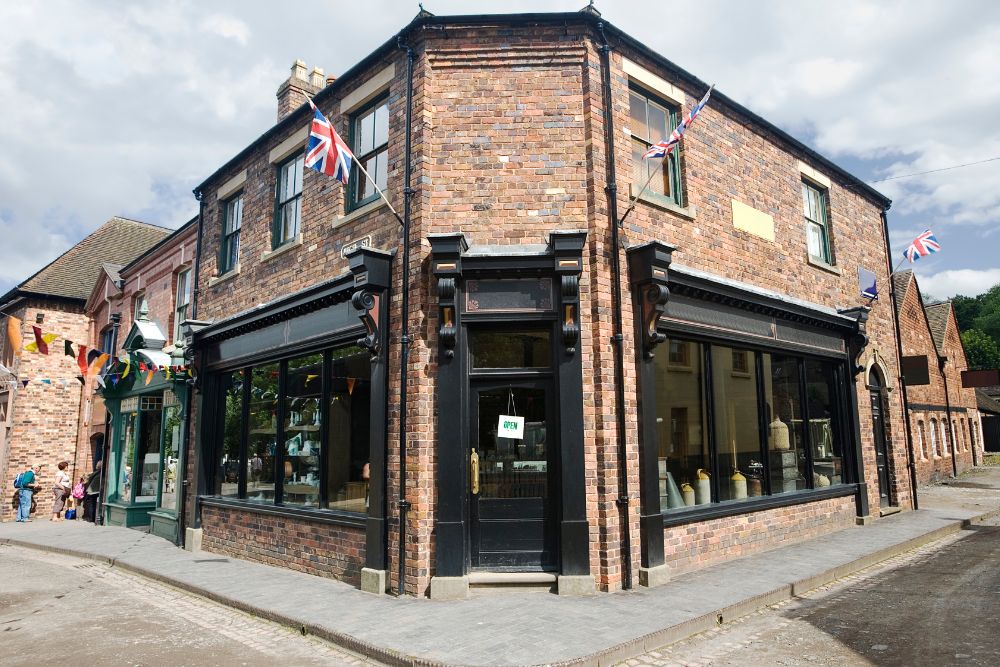
Some buildings are more complicated than others in the way they are occupied and used. It might be a shop at ground level with a flat above, it might be an office block that also houses residential units, or any other combination of uses.
When it comes to insurance, whatever the particular blend, neither a standard landlord policy nor a commercial policy alone is likely suitable. Instead, you are likely to need a commercial mixed building insurance policy – as described in this discussion about mixed-use property insurance.
Why these buildings are complex
Mixed-use residential and commercial buildings are complex for a whole host of reasons. The mixed uses imply not merely theoretical differences but also cross entirely practical boundaries:
- some are immediately apparent – such as the structural requirements of residential versus commercial premises – other differences may be more subtle, such as;
- the different use classes involve different planning regimes;
- some legal considerations may apply to the commercial, while others apply to the residential uses of the building;
- there may be competing demands from residents’ desire for a peaceful environment to the commercial sector’s aim for a high footfall and regular deliveries of goods; and
- suitable insurance typically reflects all these differences and may involve more detailed underwriting.
A residential commercial building insurance policy, for instance, may consider not only the likely structural complexities of a mixed-use building, but also the requirements and activities of its occupants, and any lease agreements that might be in place for either or both the residential and commercial sections of the property. Shared access to the respective parts of the building may pose further complications.
For owners, leaseholders, and insurers, liability towards third parties is also likely to differ. The potential liability for customers, suppliers, or other visitors to commercial premises, for example, may be greater if someone sustains an injury or has their property damaged.
Once again, it is to these practical rather than theoretical considerations that mixed building insurance providers are likely to give prominence.
Insurance cover differences
In the UK, if you are the landlord of residential property, you are likely to be looking for quite different insurance to that of a landlord of commercial property – even though both are ultimately designed to protect the structure and fabric of the building and its rental income.
The two types of insurance have been developed to cover quite distinct risks. Those risks are likely to be determined by just who occupies the building, how the premises are used, the respective levels of risk, and the complexity of any mixed-use occupation. Typically, the differences fall into two major categories. Residential use implies relatively predictable lower-risk activities, while commercial use involves potentially more hazardous activities with a heightened risk of accidents. For example:
Residential landlord insurance
- a dwelling let to individuals or families;
- core risks typically may include those such as fire, flooding, storm damage, and damage caused by tenants;
- liability cover against the risk of injury or property damage sustained by tenants, their visitors, neighbours, or members of the public;
- contents insurance – items owned by the landlord;
- compensation for loss of rental income following a major insured incident that leaves the dwelling temporarily uninhabitable pending repairs and reinstatement;
Commercial landlord insurance
- premises are let for commercial use – for example, as shops, offices, workshops, and so on;
- the core risks of fire, flooding, and storm damage may be similar to those for the residential landlord, but the commercial tenant or leaseholder may also require the safeguard of business interruption insurance;
- liability cover typically reflects greater risks to customers, suppliers, and employees, along with neighbours and members of the public;
- contents insurance may be subject to conditions detailed in the lease agreement – distinguishing between fixtures and fittings supplied by the landlord and those for which the tenant is responsible; and
- similar provision for the loss or rental income, but also with the possibility of compensation for business interruption suffered by the tenant or leaseholder.
These points help to spell out the principal differences between the insurance required by landlords of residential and commercial property respectively. For a mixed-use building, the landlord is likely to require a combined commercial and residential property insurance policy – also known as mixed-use property insurance.
Risk factors insurers assess
For mixed-use building insurance, therefore, providers will be looking at wider and more complex risk factors than would be the case for purely residential or solely commercial premises. When it comes to residential commercial building insurance, underwriters may need to consider overlapping risks – or even conflicts between – the respective use classes.
When commercial and residential property insurance is combined, insurers are likely to examine more closely many disparate factors, including:
The type of commercial tenant in place
- the production or trading activities undertaken by the tenant or leaseholder are likely to be the biggest risk factors;
- offices and professional services, for example, are likely to be low risk, shops and retail outlets medium risk, and workshops, restaurants, bars, and salons significantly higher risk – because of the fire hazards, chemicals, grease, and late hours of operation;
- a flat above a takeaway, for instance, may be considered higher risk by insurers than a flat above a solicitor’s office because of the fire and ventilation hazards;
Proportion of residential vs commercial use
- what percentage of the building is devoted to commercial activity, and how much is residential;
- that might be calculated by the number of dwellings versus the number of commercial units;
- a building that is mostly residential with just one shop within it is likely to be easier to insure than one that is predominantly commercial;
Types of tenancy
- a key consideration is likely to be whether residential and commercial units are owner-occupied or tenanted – the former likely to be regarded as lower risk;
- the duration and stability of any leases granted;
- whether commercial activities reflect established professional practices or are higher turnover;
Layout and fire risk
- mixed-use buildings are typically vulnerable to the spread of fire between residential and commercial sections of the premises;
- so, insurers are likely to consider the effectiveness of separation between the two, the alarms, detection devices, and fire doors, the escape routes, and the overall compliance with national and local fire regulations;
Construction and materials used
- insurers typically prefer standard construction of brickwork or stone against non-standard alternatives such as timber framing, cladding, or flat roofs;
- the general age and condition of the building and its plumbing, wiring, and standard of repair;
- mixed-use buildings that are also listed or have notable heritage features may be more difficult to insure and could affect premiums;
Liability risks
- mixed-use properties can pose a unique array of liability risks;
- public liability may be exposed if customers visiting commercial units trip and fall, sustaining an injury, or worse, and if you are held responsible, the damages claimed may be substantial;
- if you employ staff in connection with commercial operations, employers’ liability obligations may apply for injuries or illnesses of your employees while at work, even years after they may have left your employment;
- as an employer, there is generally a legal requirement (with limited exceptions) to arrange at least £5 million of employers’ liability insurance to meet any such claim;
- if you are the landlord of let residential units, you have a duty of care towards your tenants, their visitors, neighbours, and members of the public – once again, liability indemnity insurance is likely to be a priority; and
- in mixed-use properties, liability issues are also present because of the risk of injuries sustained by individuals using shared entrances, stairwells, communal areas, and other points of access.
The location of the combined residential and commercial premises may also have a bearing on the nature and frequency of liability claims. Factors such as prevailing crime rates, the risks of flooding or other environmental obstacles, and proximity to other high-risk businesses may all have a bearing. A busy high street, for instance, may mean greater footfall—but it also suggests higher exposure to liability claims.
How to structure policies
Mixed-use residential and commercial properties come in all shapes and sizes. When it comes to insurance, therefore, no one size is likely to fit all. Your own needs and requirements are likely to vary as widely as the insurance options on offer. Arranging suitable cover is likely to call for a tailored approach.
With those variations firmly in mind, you may want to consider options such as combined residential commercial building insurance, specialist mixed-use insurance cover, or an individually tailored landlord insurance policy with extensions that cover the commercial activities.
Insuring your mixed-use property
Mixed-use, residential and commercial buildings clearly combine different uses. Those differences are more than theoretical but underscore a host of practical differences that are ultimately reflected in the insurance needed to safeguard the property.
Insurance is necessarily complex because the various, often conflicting, demands of residential versus commercial use need to be accommodated. Insurers have a host of risk factors to weigh up, and those complexities are reflected in the underwriting process.
All in all, therefore, arranging insurance for a mixed-use building may prove a greater challenge than other purely residential or commercial properties. To navigate those complexities, you may want to draw on the professional expertise and experience of us here at Cover4LetProperty, where we will be pleased to discuss insurance options and provide a quotation, subject to individual circumstances and insurer terms.