








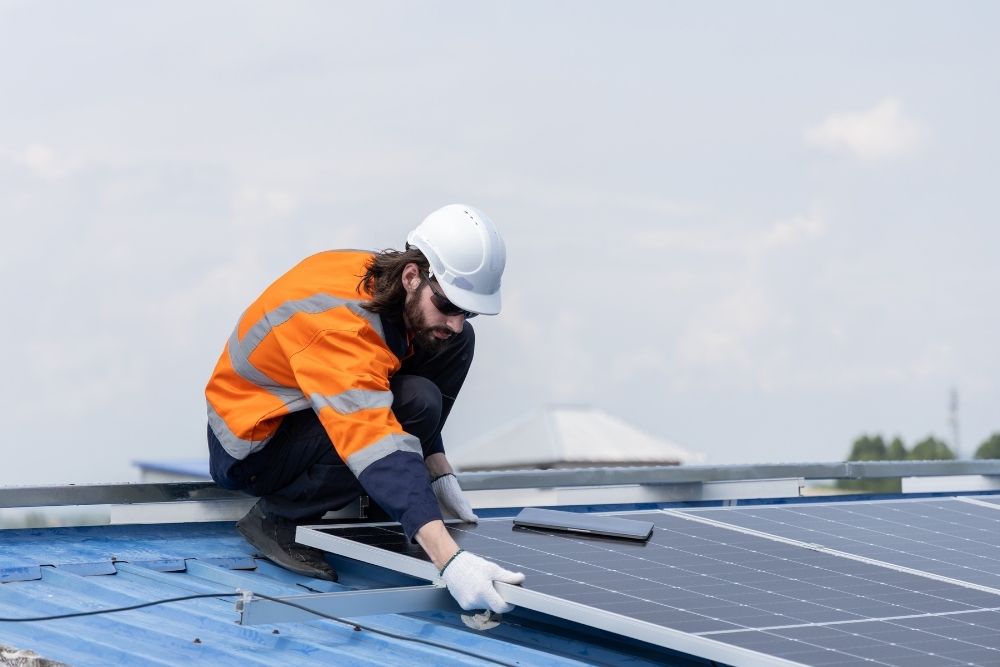
Look across the roof of almost any industrial estate and there is a good chance you will spot solar panels. Warehouses, offices, shops and other commercial premises can all provide useful roof space for generating electricity – and, for property owners, solar can be an attractive investment.
There is an insurance angle to consider, though.
Adding solar panels changes the building and may alter some of the risks your insurer originally agreed to cover. If you are thinking about installing them, it makes sense to speak to your commercial property insurer or broker before any work starts.
Do you need to tell your insurer about solar panels?
You should check your policy terms and speak to your commercial property insurance provider before the installation goes ahead.
They may want to know what type of system you are having fitted, its value, who is carrying out the work and whether batteries are part of the project. The roof itself may come under scrutiny too, particularly its construction, condition and ability to take the additional load.
Your insurer might also ask about the mounting system, cabling, inverters and fire precautions.
Don’t wait until you need to make a claim to discover that you should have mentioned the installation. If your policy requires you to notify the insurer about changes to the property, failing to do so could affect your cover or how a future claim is dealt with.
Will solar panels change the building’s insured value?
Potentially.
A commercial building’s declared value or sum insured needs to reflect the appropriate rebuilding costs. Once a photovoltaic (PV) system has been added, there may be extra equipment to replace following an insured loss.
That doesn’t simply mean the panels themselves. Depending on the installation, there may be mounting equipment, wiring, controls and inverters to consider.
Ask your insurer or broker whether the solar installation needs to be included when reviewing the property’s insurance valuation. It is also worth checking precisely what parts of the system the policy covers.
What will the insurer look at?
The roof is likely to be an important consideration. Solar panels add weight and may alter how the roof performs, so evidence that it is suitable for the proposed system may be requested.
Then there is the electrical side of the installation. Panels bring additional cabling, connections, isolators and inverters to the property. These need to be installed correctly and kept in suitable condition.
Fire is another consideration. The presence and positioning of PV equipment can affect the nature of the risk and may need to be taken into account when reviewing fire precautions at the premises.
Weather shouldn’t be forgotten either. Roof-mounted equipment is exposed to wind and storms, making the way panels are fixed to the building important. If equipment became detached and caused damage or injured somebody, there could also be liability implications.
More information: Fire safety: Solar photovoltaic panels on roofs
What if you are installing battery storage?
Tell your insurer if batteries form part of the project.
Battery energy storage brings its own set of considerations, and the insurer may want more information to assess how the installation affects the existing cover and risk. This could include the battery technology and capacity, where the units are located and the precautions in place to manage fire risk.
Requirements vary considerably. Check what your insurer expects before the system is installed rather than assuming it can simply be added later.
Does commercial property insurance require solar panel maintenance?
There isn’t one maintenance rule that applies to every insurer or every commercial property insurance policy.
Your starting point should therefore be your own policy wording, schedule and endorsements. These should be checked to establish whether the insurer has specified particular inspection, testing or maintenance requirements.
Depending on the installation, maintenance might involve checking panels and fixings, electrical connections, cabling and inverters. In some circumstances an insurer or risk surveyor may also ask for specialist inspections, such as thermographic testing of electrical equipment.
Keep the paperwork. Installation certificates, warranties and records of inspections, servicing and repairs could all be useful, particularly if you later need to demonstrate that an insurer’s requirements have been followed.
Remember your fire risk assessment
Changes to commercial premises can also be a prompt to revisit the fire risk assessment.
If solar panels, inverters or batteries have been added, consider whether they introduce risks that need to be reflected in the assessment and the fire precautions at the property. Where necessary, seek advice from an appropriately competent fire safety professional.
Check your insurance before the work starts
The key message is a simple one: don’t treat the insurance as an afterthought.
Before solar panels go onto the roof, speak to your insurer or broker. Find out what information they need, whether the building’s declared value or sum insured should be reviewed and how the new equipment will be treated under the policy, including any relevant limits, conditions or exclusions.
Finally, ask whether there are any ongoing inspection or maintenance conditions. Knowing what is expected from the outset is far easier than discovering a requirement after something has gone wrong.
Further reading: GOV.UK – Fire safety in the workplace
This article provides general information only and does not constitute insurance, legal, structural, electrical or fire safety advice. Insurance cover, conditions, exclusions and maintenance requirements vary between insurers and policies. Always check your policy documentation and speak to your insurer or insurance broker about your individual circumstances.