







If you own a UK rental cottage, you aim to generate income from the rents you charge your guests. The property may be regarded as a business asset for insurance purposes. And because it’s a business asset, it differs substantially from a wholly residential, owner-occupied home.
The differences are highlighted by the fact that your rental cottage is likely to face:
- frequent changes of occupant;
- frequent periods of vacancy – especially out of season;
- potential liability for injuries or losses suffered by guests.
Plus …
- in some situations, access may be complicated by its rural location; and
- likelihood of grounds comprising both outbuildings and land.
Those defining features make holiday cottage insurance materially different in nature from standard home insurance policies which are unlikely to reflect the letting activity and business orientation of the former.
Further reading: UK holiday home insurance vs standard home insurance: what’s the difference?
Unique risks for rural properties
We have noted some of the distinct risks at the heart of rural holiday home insurance. There are other, often more detailed, risks associated with a typical UK rental cottage in the countryside that insurers are likely to consider, namely:
- the distance from fire and rescue services;
- absence of a mains water supply;
- oil heating systems;
- no mains drainage and a reliance on septic tanks instead;
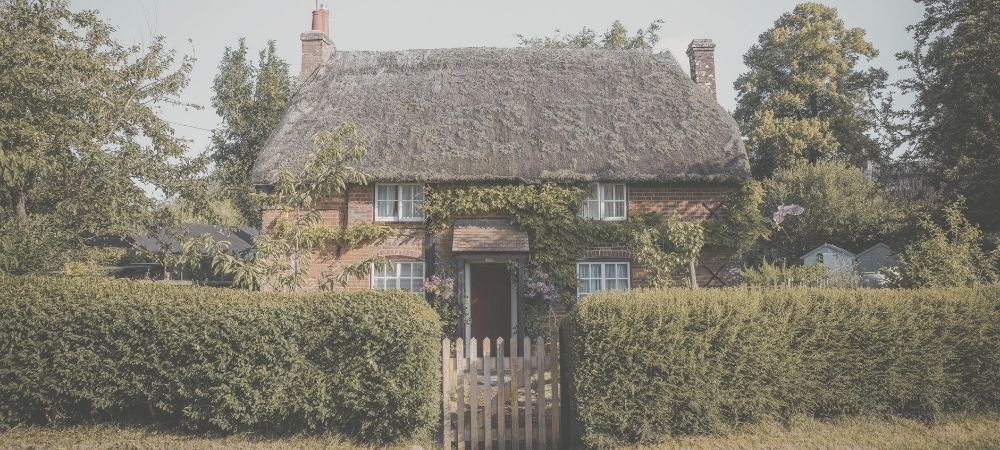
- some cottages may be of non-standard construction – built of stone or with a thatched roof, for example;
- some cottages may be listed buildings and, therefore, more complicated to repair;
- they may be situated on a floodplain or be subject to coastal exposure or storm debris from surrounding trees;
- there may be outbuildings or other detached structures in the grounds of the cottage; and
- frequent periods of vacancy or voids during changeovers of guest staysor bookings may increase the risk of theft.
All these potential features make the construction, maintenance, and access to rural properties that much more complicated than those in the typical owner-occupied home. They may typically be incorporated into holiday cottage insurance policies in the UK.
Insurance cover requirements
Holiday cottage insurance in the UK may come in all shapes and sizes, with cover varying from one insurer to another and depending on the declared use of the property. Nevertheless, there are a number of headings typically common to insurance for holiday lets:
- buildings insurance – to protect the structure and fabric of the property with a total building sum insured that reflects the rebuilding costs in the event of a serious loss;
- contents insurance – your holiday let may be furnished with items for use by your paying guests;
- property owner’s liability insurance – to protect you against claims raised by guests, neighbours, or members of the public who suffer an injury or property damage through some contact with your rental cottage;
- compensation for loss of rental income or, in certain cases, the provision of alternative accommodation – following a major insured event that leaves your holiday cottage temporarily uninhabitable pending repairs and reinstatement; and
- accidental damage caused by your guests – typically available as an optional extra.
If you plan to market your holiday rental cottage on a platform such as Airbnb, beware of offers that appear to give you a form of protection against losses or damage caused by your guests. Airbnb, for instance, operates a Host Guarantee that offers a limited degree of protection that nevertheless also contains several important exclusions – as we have described in this article.
Airbnb itself warns that the Host Guarantee is no substitute for appropriate holiday let insurance in the UK.
Storm and weather risks
Britain’s weather is notoriously unpredictable. During autumn and winter, it can also become quite stormy and severe. For many holiday cottages that are exposed to the full onslaught of coastal winds or the fury of the elements in a remote rural setting, the weather poses a significant risk which may be typically reflected in the nature of rural property insurance in the UK.
Therefore, your holiday cottage insurance is likely to take into account the more extreme weather conditions encountered near the sea or in remote rural locations. Conditions that might feature:
- coastal winds and gales;
- rainfall so heavy it overwhelms local drainage systems;
- frozen and burst water pipes – most likely when the property is unoccupied;
- damage caused by falling branches and trees;
- roofs overburdened by the weight of snow; and
- increasingly difficult access during periods of extreme weather.
In view of these distinct – and often unique – risk profiles, your insurance proposal may not result in automatic approval. If and when your proposal for holiday cottage insurance is accepted, there may also be specific policy conditions attached, such as:
- maintaining an ambient level of heating during the winter to reduce the risk of frozen and burst water pipes;
- draining down the water system entirely if the property is vacated for longer than a month or two; and
- regular, logged, and recorded inspections on the state of the property – to identify potential maintenance issues and any apparent attempts to break in.
Liability risks for guests
The rental cottage business you run also comes with responsibilities towards your paying guests. During their stay, you are the property-owning landlord and may be held liable if a guest sustains an injury or has their property damaged as a result of some negligence on your part.
Of course, there are all manner of ways in which a guest, visitor, neighbour, or even passing member of the public might come to harm while on or near your property. Some of the more common areas of risk resulting in injuries or property damage for which you might be held liable include:
- individuals slipping on stone paths;
- trips and falls on uneven floors – a particular hazard in older cottages;
- accidents involving wood-burning stoves;
- unguarded staircases that lack modern rails or banisters;
- ponds and streams in the grounds of the cottage;
- hot tubs installed as a luxury amenity; and
- outbuildings that are accessible to your guests.
With so many areas and incidents for which you may be held responsible, holiday let insurance in the UK typically incorporates an element of property owners’ liability insurance, subject to the property being appropriately maintained and all relevant policy terms, conditions, exclusions, and limits being met. This may typically include requirements relating to inspection routines, safety measures, or the safe use of features such as outbuildings, paths, heating appliances, and leisure facilities.
Mortgage provider requirements for insurance on UK holiday homes
If your holiday property is financed with a mortgage, the lender will normally expect the building to be insured on terms appropriate to its actual use, rather than as a standard owner-occupied home. Arranging ordinary home insurance for a second property that is used for holiday letting, occasional guest occupation, or extended unoccupancy periods may not meet those expectations.
Most UK mortgage conditions require borrowers to maintain suitable buildings insurance throughout the life of the loan. Where a property is used as a holiday home or short-term rental, lenders typically expect cover that reflects:
- periods when the property is unoccupied;
- use by paying guests rather than the owner;
- liability exposures linked to visitor access;
- non-standard construction or rural locations (where applicable); and
- any specialist features such as hot tubs, outbuildings, or shared access arrangements.
If a policy is arranged on the basis that the property is a standard second home, but it is in fact used for holiday letting, this mismatch could potentially place the borrower in breach of mortgage conditions. In some circumstances, lenders may require confirmation that appropriate holiday home or holiday let insurance is in place as part of their ongoing lending requirements.
Even where the property is used only occasionally by friends and family, extended vacancy between visits can still fall outside the assumptions of many standard home insurance policies. For that reason, owners sometimes review whether their insurance arrangements align with both lender expectations and the actual pattern of occupation.
Checking the wording of the mortgage agreement and discussing intended use with both the insurer and lender may help ensure that the level and type of cover arranged remain appropriate, subject to policy terms, conditions, exclusions, and limits.
Unoccupancy between bookings
For all your best efforts, your holiday cottage is unlikely to have end-to-end bookings throughout the year. Inevitably, there will be periods when the premises are unoccupied – for potentially several months at a time outside your peak letting season.
These are the times when your holiday cottage is likely to be most vulnerable to damage from undetected maintenance issues and incidents or break-ins and attempted break-ins by burglars, vandals, or other unwelcome intruders.
To mitigate those risks, your holiday cottage insurance policy might stipulate additional precautions, such as:
- regular property inspections – and a log of those inspections maintained;
- improved security arrangements – upgraded locks on doors and windows, for example, or the installation and use of an intruder alarm;
- heating controls set to maintain an ambient temperature during wintertime’s cold weather; and
- in some cases, the isolation or draining down of water systems.
If your holiday cottage remains vacant for longer than a month or two, many insurers may restrict cover after a set number of consecutive days (an interval depending on the terms of your chosen policy). In some cases, and depending on policy wording, cover might be restricted further or certain protections withdrawn altogether. In that event, you may need to consider arranging unoccupied holiday home insurance.
Choosing the most suitable cover
When choosing your holiday cottage insurance, you may want to make sure that the cover is the most appropriate and suitable for your needs. To achieve that match between your rural holiday home insurance and the safeguards you need, it is important that you keep your insurer informed of all material facts. Here are some of the key pieces of information you may want to pass on:
- a declaration that you are letting the insured property – information that any mortgage provider also needs to know;
- the use of the rental cottage, including the frequency you expect it to be occupied – and, by implication, unoccupied;
- whether you intend to market the rental using accommodation-sharing platforms such as Airbnb;
- details about the security arrangements you have in place at the property;
- accurate and up-to-date estimates of reconstruction or rebuild costs;
- whether the property is a listed building;
- whether you have installed a hot tub or other leisure facilities;
- any outbuildings that are in use; and
- a recognition that business-use exclusions may apply.
Your UK rental cottage is a valuable business asset. As such, it deserves the protection of suitable holiday cottage insurance. To achieve the perfect fit between what you need and the cover you arrange, you may want to take the time to consider all the features, risk factors, usage, and periods of vacancy you plan for your cottage. At the same time, it is important to keep any insurer fully in the picture by also sharing all this information.
All holiday cottages are different, and arranging the appropriate insurance at a competitive price may prove bewildering. To ease your search and to draw on the expertise and experience we have developed here at Cover4LetProperty, simply give us a call or make your enquiry online.
Further reading: Guide to UK Holiday Homes.
Disclaimer: The information provided in this article is intended for general guidance only and does not constitute advice or a recommendation to arrange any particular type of insurance. Cover, limits, conditions, and exclusions vary between insurers and policies. You should always check your own policy wording or speak with your insurer or broker to confirm what protection applies to your individual circumstances.