








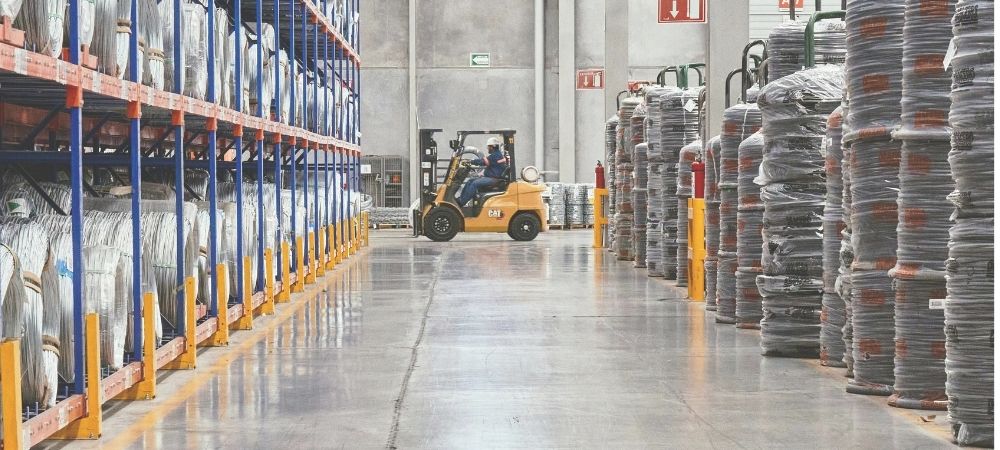
Warehouses present different risks from many other types of commercial property. Their size, construction, the goods stored within them and the activities carried out by tenants can all influence the level of insurance risk.
This article explores why warehouses are considered higher-risk commercial properties, explains what a fire load is, examines the impact of theft and other security risks, considers how tenants’ activities may affect warehouse insurance in the UK, and highlights why appropriate warehouse insurance is important for landlords.
Why are warehouses considered higher insurance risks?
When assessing the risks, insurers of commercial property typically focus not only on the building in question but also on how it is used.
They are likely to conclude that warehouses are generally bigger buildings than many other commercial properties and are, therefore, likely to attract higher rebuild costs.
Warehouses are typically used by an especially wide range of different tenants, with a range of various business activities, that may often involve the storage of valuable stock, plant, and equipment.
All these factors may influence any proposal for warehouse property insurance.
Understanding fire loads
By its very definition, a warehouse is used to store goods. Those goods can be many and varied, and are often stored on racking alongside machinery, electrical equipment and other business assets.
Many of the stored goods will also be wrapped or prepared for despatch using combustible materials such as cardboard, plastics, shrink wrap and wooden pallets. Together, these materials contribute to the warehouse’s fire load.
A fire load refers to the amount of combustible material within a building that could contribute to the intensity, spread and duration of a fire. As a result, it is an important consideration for insurers when assessing warehouse insurance risks. Generally speaking, the greater the fire load, the greater the potential for significant damage should a fire occur.
Insurers will also consider how effectively these risks are managed. Fire prevention and protection measures, safe storage methods, good housekeeping practices, regular maintenance of fire safety equipment and compliance with relevant fire safety legislation may all help reduce the overall level of risk. Further guidance on fire safety responsibilities for commercial premises is available on the UK Government website.
How fire risks affect warehouse insurance
For many UK warehouse owners and occupiers, fire is understandably one of the core risks to be covered under any effective warehouse insurance for landlords. Warehouse property insurance may typically cover loss or damage caused by fire to the building and, where appropriate, insured contents or landlord-owned fixtures and fittings. The extent of cover varies between insurers and policies.
Such warehouse insurance for landlords may typically exclude loss or damage arising from deliberate or fraudulent activity or poor maintenance and general wear and tear that has contributed to the loss. Similarly, any changes in the use of the warehouse must also be declared to the insurer.
If the warehouse is left unoccupied for between 30 and 60 consecutive days (the exact interval may vary from insurer to insurer), certain elements of cover may become restricted unless the insurer has been notified and any additional policy conditions have been met.
Theft and security risks
Warehouses present a seemingly attractive prospect for thieves:
Valuable goods
- warehouses typically store large quantities of valuable goods – from consumer electronics to clothing, alcohol, food and drink to pharmaceuticals, or tools and machinery to building materials;
- the wide variety of potentially high-value goods means that criminals may target known warehouses storing valuable goods that can be sold to order on the black market;
Isolation
- warehouses are typically situated on industrial estates;
- these, in turn, are generally in relatively isolated areas that allow criminals to operate under cover of darkness;
Single strike
- a well-stocked warehouse on a relatively isolated industrial estate may offer criminals the perfect opportunity to steal large volumes of high-value goods in a single overnight operation.
Security risks such as these may put cover against theft high on the list of priorities for landlords of warehouses. Theft is, indeed, likely to be covered by many warehouse property insurance policies, but the nature and extent of that cover may be influenced by the level of security maintained in and around the warehouse in question. The installation of alarm systems, CCTV, lighting and fencing, and access controls may all play a part in assessing the risks of theft.
How do tenant activities affect warehouse insurance?
Warehouse insurance for landlords relies on an accurate disclosure of the nature of tenants’ business operations. This helps insurers assess the risks they are being asked to underwrite. It follows, therefore, that on any change of tenant – or the tenant’s business activities – the insurer must also be informed.
Tenants’ activities may be diverse. They may range, for example, from distribution and e-commerce fulfilment to manufacturing processes, woodworking, vehicle repair, or the storage of hazardous chemicals. Each activity is likely to bring its unique pattern of risks.
What other risks do warehouse landlords face?
In addition to the distinct risks presented by a warehouse and its tenants’ activities, the premises are also exposed to a wide range of threats encountered by practically any other commercial property.
There are risks of loss or damage to the structure and fabric of the building, for example, from incidents such as storm damage, impacts (by vehicles or falling objects), escape of water, or vandalism.
In common with owners of other types of commercial property, warehouse landlords also risk property owners’ liability claims if a customer, visitor, neighbour, or passing member of the public is injured or has their property damaged through some form of contact with the premises. Successful claims may involve the payment of substantial sums in compensation.
Warehouse insurance for landlords may also need to take account of those times when the premises are empty and unoccupied. Even in the absence of stored goods, the building itself may need to be protected by suitable insurance. At times such as these, it is important to understand the insurer’s policies with respect to the unoccupied warehouse. If the period of unoccupancy extends beyond 30 to 60 consecutive days – the precise interval depending on the insurer’s policies – cover may become restricted and a standalone alternative, commercial unoccupied property insurance, may be required.
What does warehouse insurance typically cover?
Commercial warehouse insurance policies may vary quite widely in respect of the specific risks covered. When arranging warehouse insurance for landlords, therefore, you may want to consider whether some or all of the following risks are covered:
- buildings insurance – to safeguard the structure and fabric of the building against loss or damage;
- accidental damage – sometimes available as an optional extra or add-on;
- some insurers also offer terrorism cover as an optional extension, subject to eligibility and policy terms;
- property owners’ liability insurance – indemnity limits of £5 million or more are commonly available, although the appropriate level depends on the size of the property, tenants’ activities and the individual circumstances;
- compensation for loss of rental income following an insured event that leaves the warehouse temporarily unusable pending repairs and reinstatement; and
- legal expenses in the event of disputes with tenants, neighbours, or others injured or suffering property damage through contact with the warehouse.
How can warehouse landlords reduce insurance risks?
As with other forms of commercial property insurance, warehouse landlord insurance requires the policyholder to take all reasonable steps to reduce or mitigate the risks of loss or damage.
There are many practical ways in which you may help to reduce insurance risks – some of which may also be a condition of your commercial property insurance. Just a few of such measures include:
- regular inspections;
- fire risk assessments – as and when required;
- planned maintenance schedules;
- suitably maintained and operated security systems;
- an understanding of tenants’ operations; and
- the notification to insurers of any change of tenants, alterations to the building, or other material changes to the insured risks.
Conclusion
Warehouse insurance for landlords takes into account a wide range of factors encompassing:
- the nature, size, and location of the building itself;
- the business activities and operations of the tenants occupying the warehouse;
- the nature of the stored goods (including potentially hazardous goods) and the manner of their storage – including the relevant fire loads; and
- an assessment of the overall risks to be underwritten.
If you’re a commercial landlord looking for warehouse insurance in the UK, it’s worth reviewing how factors such as the size of your property, the nature of your tenants’ activities and the type of goods stored within the warehouse could affect your insurance requirements. Regular reviews can help ensure your cover continues to reflect your property and any changes to your circumstances.
If you’d like to discuss your warehouse insurance requirements or have questions about your existing cover, the experienced UK-based team at Cover4LetProperty will be happy to help you explore your options and answer any questions you may have.
Further reading: Commercial property risks landlords often overlook (and how insurance protects you)