

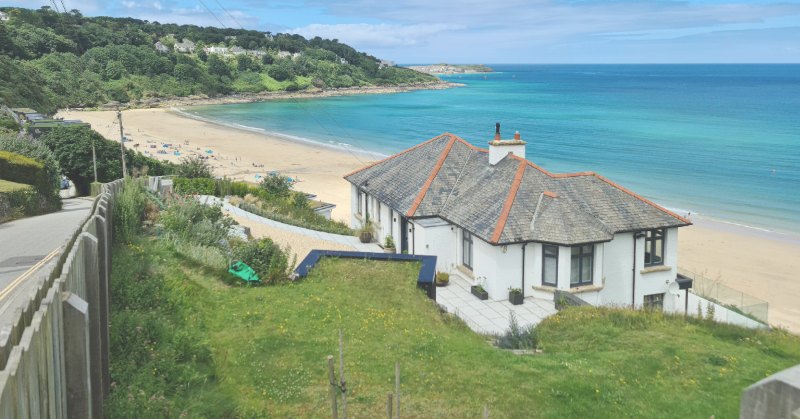
A holiday home on the coast may be thoroughly inviting when it is caressed by summer’s gentle breezes. In the dead of winter, when storms are raging, tidal flooding threatens and nearby cliffs are eroding, it may present an altogether different picture.
This is a home that may pose greater maintenance risks – not least the effort needed to keep the property wind and watertight – and may require insurance that takes account of its coastal location. Specialist UK holiday home insurance may offer relevant protection, subject to the policy terms.
Why does coastal location matter for holiday home insurance?
Throughout the year, a holiday home on the coast is exposed to salt-laden air. Even gentle summer breezes can carry sea salt that contributes to corrosion. As summer turns to winter, winds may strengthen, the weather can become more severe and the risk of damage may increase. Nearby cliff erosion or tidal flooding may add to those risks.
Holiday home insurance may provide financial protection in the case of sudden, unexpected damage from insured events, such as certain storms or floods. However, cover depends on the individual policy, and coastal erosion is commonly excluded.
Separate from insured events, coastal properties may also experience gradual deterioration through wear and tear, which is generally not covered.
What are the main risks facing coastal holiday homes?
Some of the main risks facing coastal holiday homes include:
Salt corrosion and accelerated deterioration
- corrosion caused by the ever-present salt-laden air may accelerate the normal processes of deterioration;
- metalwork may be especially vulnerable to this steady deterioration as it affects external fixtures, roofing components, and window fittings – all of which may require more frequent attention and maintenance than inland properties;
- although deterioration may be accelerated by the property’s location, insurers generally treat gradual corrosion as wear and tear requiring maintenance, rather than an insured event.
Coastal erosion and ground instability
- many of Britain’s cliffs and stretches of coastline are notoriously prone to coastal erosion;
- as the cliff edge retreats, so the coastal erosion might threaten to creep up on your holiday home and cause damage to the property itself;
- check the wording of your holiday home insurance carefully: coastal erosion and loss of land are commonly excluded, and should not be assumed to be covered.
Coastal flooding and tidal surges
- coastal holiday homes on low-lying land may be more vulnerable to exceptionally high tides and coastal flooding;
- in winter, those high tides, coupled with storm surges, will raise the risk of flooding to coastal properties;
- because of the risk of coastal flooding, some insurers may restrict cover, apply a higher excess or require specific flood-protection measures.
Storms and wind-driven rain
- storms and lashing rain may lead to a sudden and damaging ingress of water;
- however, some coastal properties may suffer a more or less constant ingress of water at certain times of the year because of defective or inadequate maintenance;
- cover may apply to sudden storm damage, including resulting water ingress, where the policy terms and definition of storm are met; water damage due to defective maintenance or gradual ingress is generally excluded.
These are some of the risks that can affect coastal properties. The risks specific to your holiday home will depend on its location, construction, condition and exposure.
How can coastal risks affect insurance availability and premiums?
When assessing an application for insurance for your coastal holiday home, an insurer may consider characteristics such as its:
- geographical location;
- proximity to the sea;
- record of any previous flooding;
- construction of the property – non-standard construction, for example, may introduce additional risks;
- condition of the property; and
- any history of previous claims.
You can also check the government’s long-term flood-risk assessment for an area in England, which includes flooding from the sea. Separate official services are available for Wales, Scotland and Northern Ireland. An area-level assessment does not establish whether an individual property will flood.
An insurer may request further details about risks to your coastal holiday home and, in some cases, refer the application for specialist underwriting. The outcome may include higher premiums or excesses, exclusions, restrictions or conditions, depending on the property and insurer.
Further reading: Guide to UK holiday home insurance.
How can owners reduce coastal property risks?
Owning a coastal holiday home may require more frequent maintenance to keep it in good repair – something insurers may also require under the policy conditions.
Your normal property maintenance regime, therefore, may need always to consider the general risks of any property located close to the sea. Particular attention may need to be paid to:
- the use of corrosion-resistant fixtures on doors and windows;
- regular inspections and checks of door, window, and ventilation seals, along with roofing components;
- more frequent inspections before and after severe weather;
- maintenance of adequate drainage and water run-off; and
- keeping detailed and dated inspection records along with the repairs and maintenance action taken.
What should owners check in their coastal holiday home insurance?
It may be especially prudent to carefully check the detailed terms, conditions, exclusions, and any restrictions of your coastal holiday home insurance.
Check the policy wording for storm and flood cover, including definitions, exclusions, excesses and any conditions. Coastal erosion and gradual damage caused by salt-laden air, poor maintenance or wear and tear are commonly excluded. Do not assume that all damage associated with severe weather will be covered.
Pay particular attention to excesses, any conditions applying while the property is unoccupied, and whether loss of rental income is covered if the holiday home becomes uninhabitable following an insured event. Check applicable limits, waiting periods and exclusions.
When applying for or renewing insurance, answer the insurer’s questions accurately and completely. Tell your insurer about relevant changes in circumstances in line with the policy terms.
Frequently asked questions about coastal holiday home insurance
UK holiday home insurance can address risks associated with properties close to the sea, but cover is determined by the individual insurer and policy. Here are answers to some common questions:
Does UK holiday home insurance cover damage from sea storms?
- sudden damage caused by a storm may be covered where it meets the policy’s storm definition and other terms;
- not all damage is automatically covered: gradual deterioration, poor maintenance and coastal erosion are commonly excluded, while flood or storm-surge cover must be checked separately.
Is salt corrosion covered by insurance?
- gradual corrosion caused by salt-laden sea air is generally treated as wear and tear and is unlikely to be covered.
Does holiday home insurance cover coastal erosion?
- damage resulting from coastal erosion or loss of land is commonly excluded; check the policy wording rather than assuming protection;
- coastal erosion can gradually undermine land and foundations, even when damage becomes apparent suddenly.
Can I insure a holiday let in a coastal flood-risk area?
- insurance may be available for a holiday home in a coastal flood-risk area, but options can be more limited and specialist underwriting may be needed;
- the property’s location, flood history, construction and flood-resilience measures can affect premiums, excesses and the scope of cover.
Protecting your coastal holiday home
Protecting your coastal holiday home may require more attention than protecting an inland property. Location-specific risks – whether on a clifftop or low-lying coastal land – and the building’s construction can affect the insurance available. Regular inspections, maintenance and timely repairs are particularly important during the winter months.
For further information about UK holiday home insurance and the cover available for your circumstances, please contact us here at Cover4LetProperty. Always check the policy wording, schedule and endorsements for the cover, exclusions and conditions that apply.
Disclaimer: This article is intended for general information only and does not constitute insurance advice or a recommendation. Insurance cover, terms, conditions, exclusions and excesses vary between policies and insurers. Always refer to your policy wording, schedule and endorsements, and speak to your insurance provider if you are unsure whether a particular risk is covered. Information is correct to the best of our knowledge at the time of publication and may be subject to change.