








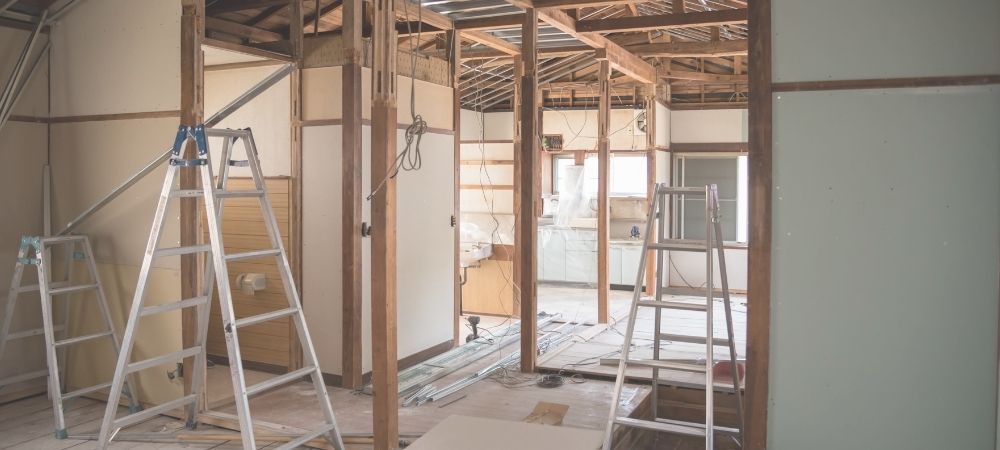
Are you refurbishing or renovating an investment property you have bought to let? The responsibilities of a landlord are onerous enough. But there’s almost certainly been a lot to consider when planning for additional building works. Have you made sure the property remains appropriately insured while renovation work is underway?
Many investors buy property that requires updating or refurbishment before they can let it to tenants. It is important to bear in mind that the renovation work itself may increase the risks affecting your existing landlord insurance arrangements.
The precise nature of any insurance for property renovations, of course, depends on the extent of the project and your insurer.
Why insurance matters during renovation work
Insurance for your property is affected by its circumstances – how it is used and what is going on around the home. During renovation and refurbishment projects, the risks of loss or damage may increase:
- the risk of fire may increase, for example, because of electrical works by contractors;
- the contractors’ work may also increase the risk of accidental damage and damage through an escape of water;
- your liability as the property owner is likely to increase in your interactions with contractors, suppliers and other visitors to the site, as well as passing members of the public – landlord’s liability is discussed further in this article; and
- a construction site often attracts the opportunistic theft of tools, materials, and fixtures awaiting installation.
Against the background of heightened risks such as these, it is important that suitable property renovation insurance remains in place throughout the project. Throughout the building works, of course, your responsibilities as a landlord remain unchanged.
Will standard landlord insurance cover renovation work?
If you’re renovating a rental property, it all depends on the nature and extent of those building works and the policies of the insurer involved.
Different insurers, for example, may have different definitions of renovation work. In any event, however, if you are planning a mere lick of paint or a spot of redecoration, these are likely to amount merely to cosmetic improvements in any insurer’s book and not the type of structural alteration that is likely to more seriously impact your insurance cover. In the case of cosmetic improvements, your existing standard landlord insurance cover is likely to suffice. Of course, if you are unsure, always check with your insurance broker for clarification.
Because of the potentially variable definition of renovations and to satisfy any misgivings you may have about the extent of the work you have planned, you may want to inform your insurers well before the project starts. Not only is this likely to be a prudent approach, but some insurers may require such notification.
Once you have given that notification, and depending on the nature and extent of the proposed building works, your insurer may decide that your standard landlord insurance cover is no longer suitable. Instead, it may be necessary to amend or restrict the terms and conditions of the current policy – with or without any alteration to the premiums you pay.
Once again, this underscores the importance of carefully checking your insurance policy terms and conditions before the start of your renovation project.
When a property becomes unoccupied during refurbishment
Naturally, your investment property is likely to be empty before tenants can move in. It means that a further insurance complication when renovating a property is the likelihood of it becoming unoccupied during the whole or at least part of the building works.
An unoccupied property is at greater risk of theft, vandalism, and intruders such as squatters. When no one is there, otherwise minor maintenance issues may develop into major events when they remain undetected. These are explored further in this article.
Because of these heightened risks, your insurer may insist upon regular, logged inspections of the vacant property, with particular attention paid to increased security and to identify any previously undetected maintenance issues.
If the property is unoccupied for longer than between 30 and 60 consecutive days (the precise interval varying from one insurer to another), the cover offered by your standard landlord insurance may become significantly restricted or regarded as lapsed altogether. In those circumstances, you may need specialist standalone unoccupied property renovation insurance to restore the appropriate safeguards for your property.
You can read more about this in our guide: Unoccupied property insurance for renovation: Do you need cover while doing works?
Types of renovation work that may affect insurance
Renovation projects come in all shapes and sizes. Buildings insurance is likely to remain at the heart of your safeguards for the property. During renovations, building insurance may be tailored to the nature and extent of your building works:
Cosmetic improvements
- cosmetic improvements – as mentioned – are unlikely to require any change to your standard landlord insurance provisions;
- examples of such cosmetic work may include painting and decorating, laying new flooring, or minor internal upgrades;
Major refurbishment projects
- building works involving structural alterations may be described as major refurbishment projects;
- examples include extensions, loft conversions, the removal of load-bearing walls, or extensive electrical or plumbing works;
Full property renovations
- if your property is destined for a complete makeover and renovation, the risks are likely to be multiplied several times over;
- the dwelling may be empty and unoccupied for a considerable period;
- such a major refurbishment project is likely to involve multiple contractors; and
- in these circumstances, the insurance considerations are almost certain to become a major priority.
Insurance considerations before work begins
Before starting any renovation project, do inform your insurers about your plans. You are likely to be asked to provide full and accurate details about the project.
That may also be the time for your insurers to confirm whether the existing cover remains suitable or if additional conditions and restrictions may be applied. This will also give you the opportunity to review the total building sum insured.
You can read more about this here: House rebuild cost calculator: How to calculate the correct buildings insurance sum insured.
Make sure to keep written confirmation from your insurers of any agreed arrangements for the cover that is in place for your investment property insurance.
Protecting building materials and fixtures
During any renovation project, you are likely to take delivery of building materials and fixtures and fittings awaiting installation. You may also own plant and equipment stored onsite. Fixtures for kitchens, bathrooms, windows, doors, and appliances in particular, may all be targets for theft.
In view of those heightened risks, site security measures become paramount and may be specifically addressed by your renovation insurance. If your insurer has imposed particular security precautions, of course, these should be followed. They may include measures such as temporary alarms, additional lighting, and, in some cases, physical security.
Reviewing insurance once the renovation is complete
When your refurbishment project is complete, you will want to re-establish the appropriate level of standard landlord insurance.
Where the renovation has resulted in improvements that increase the value of your investment property, you may need to raise the total building sum insured – as it reflects the increased estimate of rebuilding costs in the event of a total loss. But you may also want to review the contents and fixtures cover, values which may have also increased because of the property’s improvements.
Common mistakes landlords make during renovation projects
Planning and preparing for a major renovation project may involve a myriad of considerations. Amid those preparations, it may be easy to overlook the importance of suitable property renovation insurance. Here are some of the more common mistakes likely to be made in advance of renovation work starting:
- failing to notify your insurers about all the details of your proposed project;
- assuming that your existing insurance cover will automatically continue – without further conditions or restrictions;
- leaving a property empty and unoccupied – even when builders are at work there most days – without informing your insurers;
- failing to satisfy yourself that your contractors’ insurance arrangements are in order;
- ignoring any policy conditions imposed by your insurers about security arrangements or property inspections; and
- underestimating the revised rebuilding costs – and total building sum insured – once improvements have been made and the project has been completed.
Getting insurance advice before renovating
Investment properties come in all shapes and sizes, and every renovation project is different. Thanks to those differences, the insurance requirements may also vary – potentially quite widely – depending on the property itself and the nature and scale of the proposed building works.
Any insurance when renovating a property may also come with particular policy conditions, restrictions, and exclusions, all of which are important to understand before the project begins.
These considerations point to the benefits of consulting a specialist landlord insurance broker for guidance tailored to your circumstances.
Frequently asked questions
Should I update my buildings sum insured after renovation?
If the improvements increase rebuilding costs, you may need to increase the buildings sum insured to reflect the property’s revised rebuilding value.
What insurance should contractors have?
Contractors will typically arrange their own liability insurance, but landlords should still check that suitable insurance is in place and review their own insurance requirements.
What happens if the property is empty during renovation?
Cover may be restricted if the property remains unoccupied for longer than the period permitted by your insurer. Specialist unoccupied renovation property insurance may be required.
Do I need to tell my insurer before renovating a rental property?
Many insurers require notification before work starts. Always check your policy wording and speak to your insurer or broker if you are unsure.
Does landlord insurance cover renovation work?
It may do, depending on the type and extent of the work. Cosmetic improvements may be covered, while more substantial projects may require additional arrangements.
Do you need special insurance when renovating a rental property?
You may need specialist renovation insurance if the property is empty, undergoing structural work, or if standard landlord insurance excludes or restricts cover during refurbishment.
Will renovation work increase my insurance premium?
Renovation work may increase insurance premiums because the risks associated with the property can change during building works. Factors such as the extent of the renovation, whether the property is occupied, and the type of contractors involved may all influence the premium charged. Any increase will depend on the insurer and the specific circumstances of the project.
Next steps
If you are planning to renovate or refurbish an investment property, you may first want to discuss the project with our team to explore suitable insurance options for your property while renovation work is underway.
Disclaimer: This article is for general information only. Cover, limits, exclusions and policy conditions vary between insurers. Always check your policy wording and speak to your insurance broker before work begins.